

Written by Esther Swamidason
In every corner of the world, from remote mountain villages to sprawling urban slums, education remains the most powerful equalizer. Yet, for millions, it is a privilege. However, STEM (Science, Technology, Engineering, Mathematics) is changing that reality, not just as a collection of academic disciplines, but as a global movement dismantling the barriers that keep learning locked away from those who need it most.
Closing the distance gap for rural communities
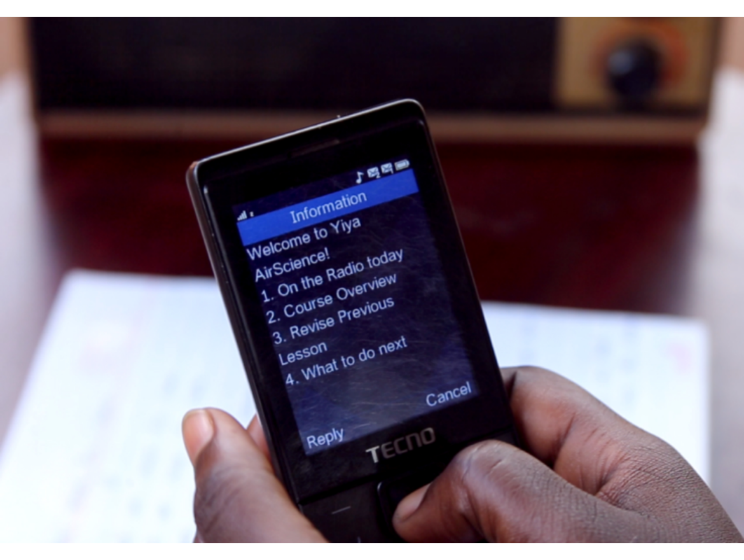
For rural students, schools in the vicinity are under-funded and have a serious teacher shortage. Due to these issues, parents encourage their children to start earning through farming, rather than completing secondary education1. For example, in sub-Saharan Africa, over 32 million children remain out of school, a number worsened by the digital divide. This is particularly worse among youth between 15 and 17, where school attendance has reduced by 60%2. Nevertheless, under the African Union ‘Innovating Education in Africa’ program, a virtual classroom called “Yiyah Air Science” application has broken through the education barriers for students in rural regions. Access to internet is not a requirement as the application uses Unstructured Supplementary Service Data (USSD), which is real-time SMS where students respond to polls and questions using a normal phone network3.
Bringing cultural relevance
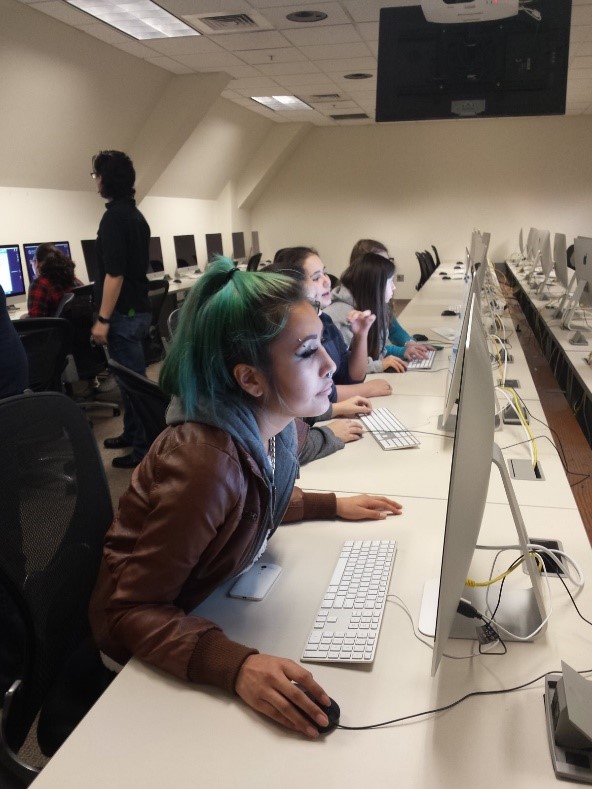
For Indigenous and culturally diverse students, education is often presented in a language, framework and worldview that erases their heritage. STEM initiatives that embrace cultural context can flip the narrative from assimilation to empowerment.4 The Native Girls Code program in the United States combines computer science with Indigenous storytelling traditions. Participants design games and websites that reflect their cultural heritage, transforming tech skills from a foreign concept into a tool of identity preservation. Graduates have gone on to lead tech projects in tribal governments and STEM-related university programs, proving that when STEM is culturally resonant, it becomes irresistible5.
Breaking gender bias
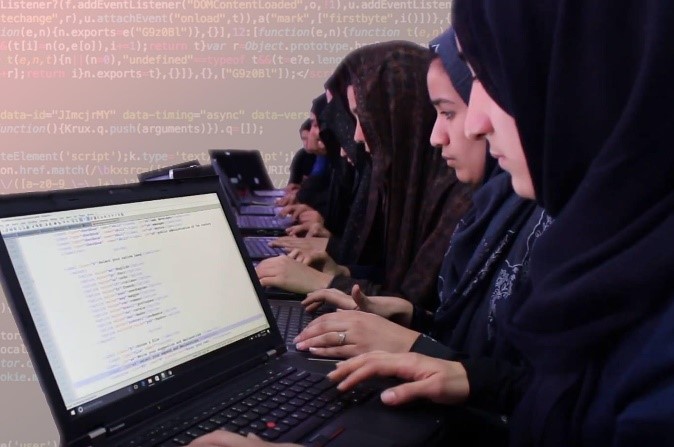
Globally, women still make up less than 30% of the STEM workforce. In some parts of the world, girls are steered away from STEM careers before they reach secondary school. Yet targeted programs are dismantling those barriers by creating safe, inclusive pathways for girls to explore science and technology without stigma6. In Afghanistan, ‘Code to Inspire’ provides young women with computer programming education in a secure, female-only space, equipping them with remote-work skills that bypass restrictive social norms. Many graduates now work as freelance developers for international clients, earning incomes that directly uplift their families and communities7.
Rebuilding post-crisis and conflict zones
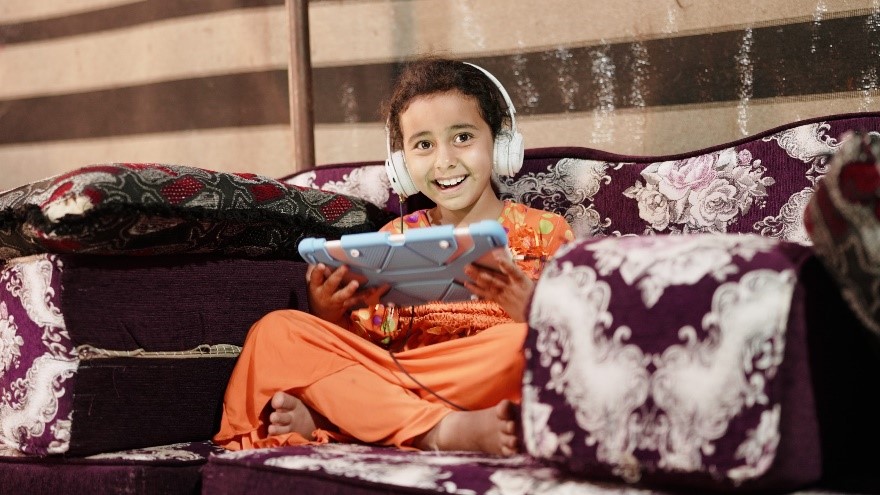
In disaster-stricken or war-torn regions, traditional education infrastructure can take years to rebuild. STEM-driven solutions are enabling learning to continue even when schools are gone.
In Syria, the “Can’t Wait to Learn” initiative transforms inexpensive tablets into gamified math and literacy platforms. Content is designed with local educators, and because the system works offline, children in refugee camps can progress academically without waiting for physical schools to be rebuilt. Evaluations show children advancing two years’ worth of math skills in just 12 months – restoring both education and hope in a generation disrupted by war9.
The Bigger Picture
What unites these stories from different parts of the world, whether it be a rural village or a refugee camp, is that STEM doesn’t just transfer knowledge; it shifts power. It turns marginalized learners into creators, problem-solvers and leaders. It levels playing fields not by lowering standards, but by raising access.
Education equality isn’t just about classroom; it’s about reaching every learner, no matter their circumstances. STEM is building those bridges and it’s nothing short of transformational.
References
- Irvin, M.J., Byun, S., Meece, J.L., Farmer, T.W. and Hutchins, B.C. (2011). Educational Barriers of Rural Youth. Journal of Career Assessment, [online] 20(1), pp.71–87. doi:https://doi.org/10.1177/1069072711420105.
- Unesco.org. (2022). Out-of-school numbers are growing in sub-Saharan Africa. [online] Available at: https://www.unesco.org/gem-report/en/publication/out-school-numbers-are-growing-sub-saharan-africa [Accessed 28 Sep. 2025].
- Asher, M.W., Kwon, C., Stamper, J., Ogan, A. and Carvalho, P.F. (2025). Validating a New Approach for Measuring Student Engagement in Remote, Low-Infrastructure Learning Environments. Proceedings of the Twelfth ACM Conference on Learning @ Scale, [online] pp.62–72. doi:https://doi.org/10.1145/3698205.3729556.
- Jacob, M., Sabzalian, L., Jansen, J., Tobin, T., Vincent, C. and Lachance, K. (2018). The Gift of Education: How Indigenous Knowledges Can Transform the Future of Public Education ‘We used to be good neighbors at one time…’ Valerie Switzler, Confederated Tribes of Warm Springs elder, Tribal Council member, language educator and Culture and Heritage Department Director. International Journal of Multicultural, [online] 20(1). Available at: https://files.eric.ed.gov/fulltext/EJ1173732.pdf.
- News. (2017). Native Girls Code, helping diversify STEM. [online] Available at: https://www.uwb.edu/news/2017/04/05/native-girls-code#:~:text=During%20the%20Native%20Girls%20Code,Information%20School%20is%20a%20partner. [Accessed 28 Sep. 2025].
- Wang, N., Tan, A.-L., Zhou, X., Liu, K., Zeng, F. and Xiang, J. (2023). Gender differences in high school students’ interest in STEM careers: a multi-group comparison based on structural equation model. International Journal of STEM Education, [online] 10(1). doi:https://doi.org/10.1186/s40594-023-00443-6.
- Project Good for Girls. (2021). Code to Inspire. [online] Available at: https://goodforgirls.org/our-programmes/code-to-inspire/ [Accessed 28 Sep. 2025].
- Brown, F.L., Farag, A.I., Alla, Radford, K., Miller, L., Koen Neijenhuijs, Stubbé, H., Hoop, T. de, Abbadi, A.A., Turner, J.S., Jetten, A. and Jordans, M.J.D. (2020). Can’t Wait to Learn: A quasi-experimental mixed-methods evaluation of a digital game-based learning programme for out-of-school children in Sudan. Journal of Development Effectiveness, [online] 15(3), pp.320–341. doi:https://doi.org/10.1080/19439342.2020.1829000.